Landing in a new country is always exciting, but it feels better when you already know the “unwritten rules” people live by. Peru has friendly, welcoming communities, yet there are small customs that can surprise visitors if no one explains them first. I want to walk you through the basics so you can relax, connect, and avoid awkward moments. Think of this as a quick, practical guide you can keep in mind on buses, in markets, at family lunches, and even on treks in the Andes. With a little preparation, your trip will feel more like visiting friends than passing through as a stranger.
Greetings and first impressions
In Peru, how you greet people sets the tone for everything that follows. People usually take a few seconds for a proper hello, and rushing past without a word can seem cold. A simple smile goes a long way, and a friendly greeting is often the first step to getting real help, honest advice, or even an invitation to join in.
For many situations, you can keep things very simple. With strangers in shops, hotels, or taxis, a basic “Buenos días” (morning), “Buenas tardes” (afternoon), or “Buenas noches” (evening) is enough. When you meet someone more personally, especially through a friend or host, the greeting gets a bit warmer.
- Between men, a firm but not aggressive handshake is common, usually with direct eye contact.
- Between women, and between men and women, a light cheek kiss (usually right cheek to right cheek, often just touching faces) is normal among friends or social contacts.
- If you are unsure, you can offer a handshake first and follow the other person’s lead.
Titles matter more than many visitors expect. People may use “Señor”, “Señora”, or “Señorita”, sometimes with a first name or last name attached. In more formal settings, you might hear “Ingeniero”, “Doctor”, or “Profesor”. If someone is older or in a professional role, it is polite to start with a title, then switch to first names if they invite you to do so.

Photo by KATRIN BOLOVTSOVA on Pexels
Conversation style and personal space
Once the greeting is done, small talk usually follows. People may ask where you are from, how long you are staying, and which cities you plan to visit. These questions are not intrusive; they are a way to show interest and build trust. If you answer with a bit of detail and ask one or two questions in return, the conversation usually flows easily.
Touch and distance can feel different from what you are used to. In cities like Lima or Arequipa, people may stand a little closer when speaking than visitors from North America or Europe expect. A friendly arm touch on the shoulder during conversation is normal. If you step back several times, it can look like you are upset or uncomfortable with the person, even if you are just protecting your space.
| Region | Typical speaking distance | Conversation tone |
|---|---|---|
| Coastal cities (Lima, Trujillo, Piura) | Closer, sometimes an arm’s length or less | Fast, animated, more interruptions |
| Highlands (Cusco, Puno, Ayacucho) | Slightly more distance, especially at first | Calmer, with longer pauses and softer voices |
| Jungle regions (Iquitos, Tarapoto) | Varies, but often relaxed and informal | Friendly, with a lot of curiosity about visitors |
Politics and current events do come up, and people may be very direct about their opinions. If you do not feel ready to discuss deeper topics, you can keep the focus on food, travel, music, or football. When someone shares something personal, listening with patience and respect is more valued than having a clever reply.
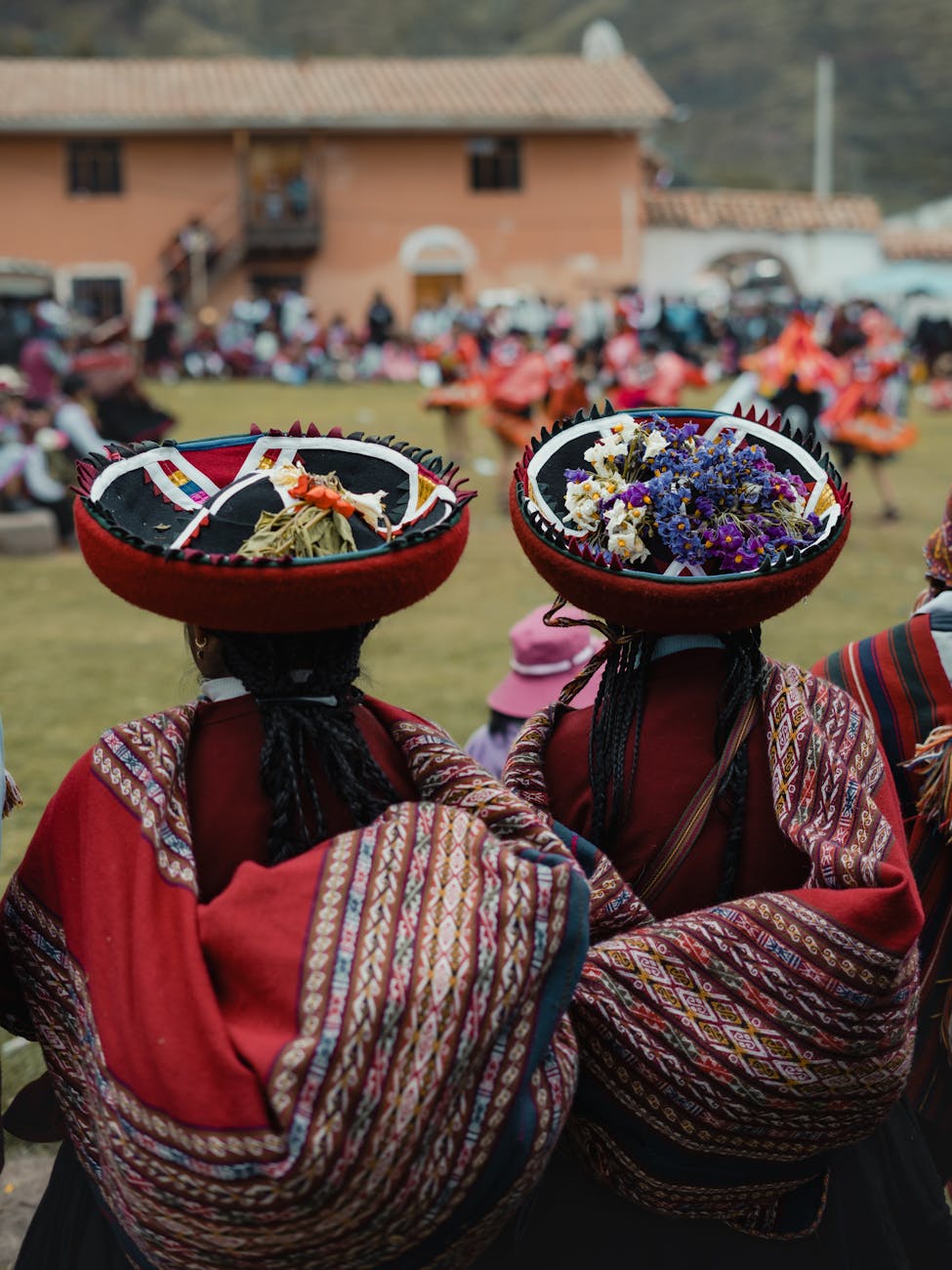
Photo by Antropologo En Ruta on Pexels
Eating and drinking customs
Meals in Peru are a big part of social life. Lunch is often the main meal of the day, especially outside the largest cities, and it can last longer than you expect. If a family or host invites you to eat, they are offering more than food; they are opening their circle to you.
- People usually wait until everyone is served before they start eating, unless the host clearly insists you begin.
- You might hear “Buen provecho” as people start or when someone walks by while you are eating. You can simply reply “gracias”.
- Leaving a small amount of food on the plate can suggest you are full, but finishing everything is also fine and often taken as a compliment.
In casual restaurants, especially “menús” that serve set meals at lunch, the service can feel quick and straightforward. You often pay at the counter or directly to the server after you finish. Tipping is more common in tourist areas and nicer restaurants, where around 10 percent is a normal gesture when service is good, though it is not as strictly expected as in some other countries.
Alcohol appears in many social settings, but the way it is shared has its own rhythm. With beer, one person might pour into a shared glass, drink, refill, and pass the glass in a circle. Saying “salud” and making brief eye contact before drinking is polite. If you do not drink alcohol, a simple explanation is usually accepted without pressure, especially if you still stay present and engaged with the group.

Photo by Nano Erdozain on Pexels
Social invitations and gift giving
If you stay more than a few days in one place, you may receive an invitation to someone’s home or to a family event. Arriving right on the stated time is rare in many social settings. Being 15–30 minutes “late” is often normal for casual visits, though for formal events like weddings or tours you should still respect the schedule you are given.
Bringing a small gift is a kind way to say thank you. You do not need anything large or expensive. A box of chocolates, flowers (for the host, not for funerals), or something from your own country works well. If children are present, small sweets or stickers can make you very popular, but it is best to offer them through the parents instead of directly to the kids.
When food or drink is offered, hosts may encourage you several times to have more. Refusing too strongly at first can seem unfriendly, even if that is not your intention. If you are full, you can smile and say something like “estaba muy rico, ya no puedo más” to show that you enjoyed it but really cannot keep going. People usually accept that with good humor.
Goodbyes are another important moment. Just like greetings, people often prefer personal farewells to a quick wave from the door. Taking a minute to say thanks to each person, with a handshake or cheek kiss, leaves a warm memory and can open doors if you come back later.
Respecting traditions and local sensitivities
Peru has strong Indigenous, Spanish, African, and Asian roots, and many families hold traditions that go back generations. You will notice religious images in homes, small shrines on mountain roads, and local festivals that mix Catholic and older Andean customs. Even if you do not share these beliefs, showing quiet respect is appreciated.
In churches, markets, and villages, dressing modestly keeps attention off you and shows care for the community. This does not mean you need formal clothes. It usually means avoiding very revealing outfits, especially in the highlands and in smaller towns where people may be more conservative. In some sacred places or community events, your guide might ask you not to take photos of ceremonies or certain objects. Listening to that request shows that you see the space as more than a tourist stop.
Talking about history and identity can be sensitive. People may feel proud of Indigenous roots, regional culture, or national symbols, and they may also carry pain from discrimination and past conflicts. If someone shares personal or family stories related to these topics, the kindest thing you can do is give them your full attention and avoid making quick jokes or comparisons with your own country.
Small acts of courtesy, like greeting older people first, offering your seat on crowded buses, and asking before taking close-up photos of vendors or children, send a clear message: you see the people around you as more than part of the scenery. That is what most locals remember long after you have moved on to your next stop.
Learning these social details before you go might feel like a lot, but once you are on the ground it starts to feel natural. You greet people, share a meal, respect the rhythm of conversations, and suddenly you are not just passing through Peru, you are part of daily life for a little while. Keep your curiosity open, follow the signals people give you, and do your best to respond with patience and kindness. If you make a mistake, a quick apology and a smile usually fix it. With that approach, your trip will give you more than photos; it will give you real human connections to carry home.


